Reclaimed Clay Bricks
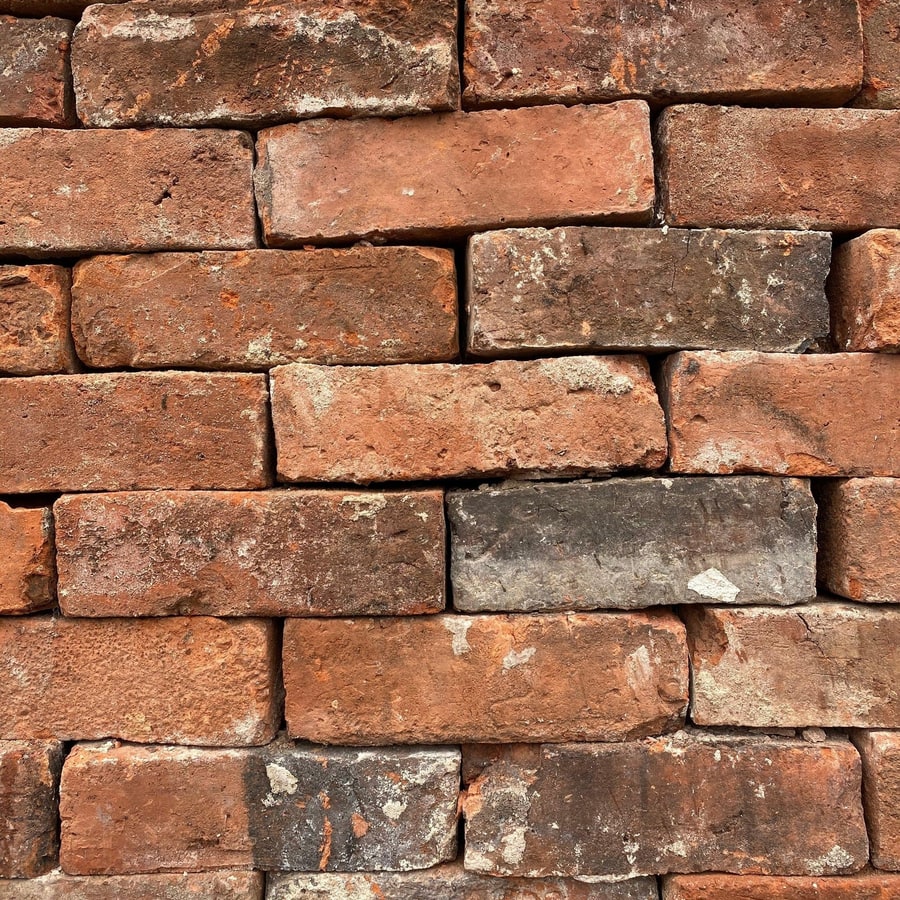
Reclaimed clay bricks recovered, cleaned and graded at the Sheffield yard. They hold a third-party verified EPD, declared per tonne of product — uncommon for reclaimed material.
Carbon and evidence
Product Evidence
Evidence currently held for the Reclaimed Brick Company product record.
Recorded Carbon Result
GWP-total, A1–A3, per 1 tonne of reclaimed clay brick. Negative because of packaging biogenic carbon returned at A5 — read with the fossil figure of 20.4.
A1–A3 covers raw-material supply, transport to manufacture and manufacturing. It is product-stage information, not a whole-life result.
Environmental Product Declaration
EPD recorded- Coverage
- Specific product
- Declared unit
- 1000 kg of reclaimed clay brick
- Programme
- EPD Hub
- Registration
- HUB-4594
- Standard
- EN 15804:2012+A2:2019/AC:2021 and ISO 14025
- Valid until
- 2030-12-04
- Verification
- Third-party verified
Covers reclaimed clay brick graded at the Sheffield depot, for the 2024 calendar year. PCR: EPD Hub Core PCR v1.2 (24 Mar 2025). Verifier Vera Durao for EPD Hub; author Dr Aaron Yeardley, Tunley Environmental.
Carbon profile
kgCO2e per 1 tonne (1,000 kg) of reclaimed clay brick · each bar starts at zero · local scale
A1-A3 product
-3.18
A4-A5 site*
41.2
B use
—
C end of life
17.5
D reuse / recycling
-8.89
It stores more carbon than is emitted in making it, but the stored carbon is released again at the end of its life.
Reported GWP Modules
Displayed as stored; modules are not added together here.
A1–A3
-3.18 kgCO₂e
per 1 tonne (1,000 kg) of reclaimed clay brick
A4*
14.8 kgCO₂e
per 1 tonne (1,000 kg) of reclaimed clay brick
A5*
26.4 kgCO₂e
per 1 tonne (1,000 kg) of reclaimed clay brick
C1
3.17 kgCO₂e
per 1 tonne (1,000 kg) of reclaimed clay brick
C2
5.22 kgCO₂e
per 1 tonne (1,000 kg) of reclaimed clay brick
C3
2.53 kgCO₂e
per 1 tonne (1,000 kg) of reclaimed clay brick
C4
6.57 kgCO₂e
per 1 tonne (1,000 kg) of reclaimed clay brick
D
-8.89 kgCO₂e
per 1 tonne (1,000 kg) of reclaimed clay brick
Upfront Carbon (A1–A5)*
38 kgCO₂e per 1 tonne (1,000 kg) of reclaimed clay brick
A1–A3 -3.18 + A4 14.8 + A5 26.4 · as declared
Service Life — the B4 Replacement Input
100 years · basis not recorded
≈1 installation over a 60-year building study period.
Comparison Status
This result should be displayed for information only and not ranked against another product.
- • The PCR and version are missing.
- • The GWP indicator is missing.
- • The carbon result is not linked to an evidence source.
- • The EPD is not linked to an evidence source.
Evidence Gaps
- •No product-specific circularity or material-health claims are recorded.
How This Is Made
The declaration above covers the material as supplied, against its declared unit. These are the process and provenance facts behind it — what the trade does with it, and what a declared unit cannot express.
Brick has been salvaged and relaid for as long as brick buildings have been taken down
Process
Feedstock
Reclaimed
Existing fired clay brick recovered from demolition; no new clay is quarried and nothing is re-fired
Process heat
No heat
Binder
Mechanical
Fabrication
Workshop-made
Sourcing: yard-dependent; ask where the stock actually came from
Who Builds It
General trade
Established in the UK
Cleaning is the cost. Bricks laid in lime come apart cleanly; bricks laid in cement often break in the attempt, which is why yield varies so much between batches
End Of Life
Separable
Lime-mortared brick can be cleaned and reclaimed again; cement-mortared brick usually cannot
Maintenance: Repointed in a mortar weaker than the brick; lime, not cement
Specification Risk
What a specifier has to resolve before this can be built.
- Certification
- No CE/UKCA marking. Frost resistance and compressive strength vary with the original firing and are not declared unless the yard tests them
- Fire
- Non-combustible
- Warranty
- Supplier warranty on quantity and grade only
- Insurance
- Not normally an issue for facing work; structural use needs engineer sign-off
- Supply
- Finite and non-repeatable. Secure the whole quantity plus wastage in one lot — a matching second batch may not exist
Read This Honestly
- •Frost resistance varies with the original firing. For exposed or below-DPC work, have the batch tested rather than assumed.
- •Specify a lime mortar. It is what lets these bricks be reclaimed a third time, and it is weaker than the brick, which is the point.
- •Reclaimed does not mean local. Stock is routinely hauled the length of the country; ask the yard where it came from.
- •This supplier holds a verified EPD; most reclamation yards do not. Do not read the figure across to unbranded reclaimed stock.
Reference Sources
Design & Specification Notes
Qualitative notes for early design discussion. Not product-specific EPD evidence, and not a basis for numerical comparison.
Reclaimed clay bricks recovered, cleaned and graded at the Sheffield yard.
Material Note
The declared A1–A3 total is negative, but only because of biogenic carbon in the timber packaging, which is released again at A5. The bricks carry 20.4 kgCO2e of fossil carbon per tonne to the gate.
Typical Uses
- •Facade cladding
- •Weather protection
- •External accents
Key Performance
Weather-resistant finish for facade exposure.
Specification Actions
- •Request the current EPD and confirm it covers the grade and depot you are being quoted from.
- •Read the fossil figure, not the total: the negative headline is packaging biogenic carbon that returns at A5.
- •Specify a lime mortar so the brick can be reclaimed again at end of life.
Indicative Health & Indoor Air
Inert fired clay.
Specification
- Finish
- Salvaged clay facing brick, graded
- Service life
- 100 years