IndiTherm
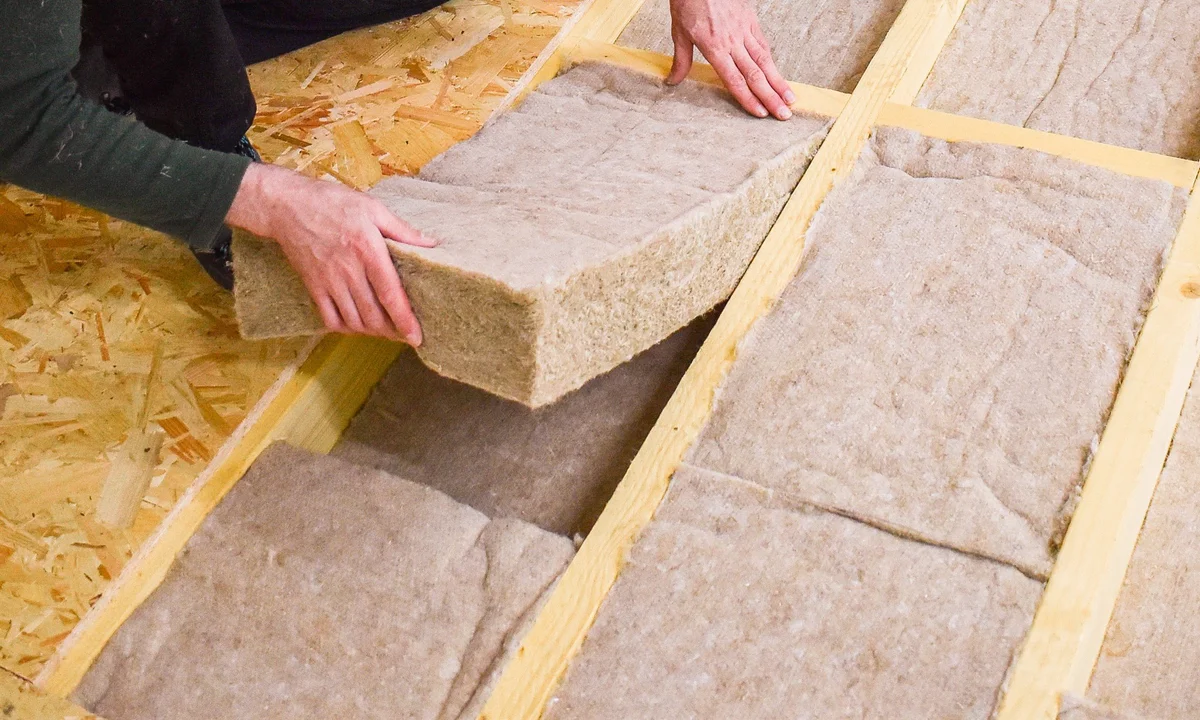
A friction-fit insulation batt made from industrial hemp grown in the UK and processed in the Scottish Borders — roughly 90% hemp fibre with sodium carbonate as fire retardant and a polymer binder holding it together. It is one of very few insulation products where the crop, the mill and the building are all in the same country, which is what removes the freight that dominates most bio-based insulation. Vapour-open and dense enough to give real decrement delay, so it is specified for breathable retrofit build-ups where a foil-faced board would trap moisture.
Carbon and evidence
Product Evidence
Evidence currently held for the IndiNature product record.
Recorded Carbon Result
A1–A3 per m³ at 45 kg/m³, EXCLUDING biogenic carbon, from IndiNature’s own 2024 product LCA — not from a verified EPD, so this is a manufacturer figure. The LCA’s own range is 21.09–26.84 depending on the processing scenario. The hemp additionally stores 58.82 kgCO2/m³, which the same document releases in full at end of life, so the store is a loan rather than a removal.
Indicator: GWP-total excluding biogenic
IndiNature: IndiTherm® Product LCA (2024)A1–A3 covers raw-material supply, transport to manufacture and manufacturing. It is product-stage information, not a whole-life result.
Environmental Product Declaration
No EPD recordedIndiNature publish a product LCA following EN 15804+A2 methodology rather than a registered EPD, so these figures are recorded as manufacturer-declared rather than third-party verified.
Absence of an EPD does not mean the product has zero impact; it means no current declaration is held in the database.
Carbon profile
kgCO2e per 1 m³ of batt at 45 kg/m³ · each bar starts at zero · local scale
A1-A3 product
23.5
A4-A5 site*
1.68
B use
—
C end of life
1.63
D reuse / recycling
-5.6
Reported GWP Modules
Displayed as stored; modules are not added together here.
A1–A3
23.5 kgCO₂e
per 1 m³ of batt at 45 kg/m³
A4*
1.64 kgCO₂e
per 1 m³ of batt at 45 kg/m³
A5*
0.04 kgCO₂e
per 1 m³ of batt at 45 kg/m³
C1
0 kgCO₂e
per 1 m³ of batt at 45 kg/m³
C2
1.63 kgCO₂e
per 1 m³ of batt at 45 kg/m³
C3
0 kgCO₂e
per 1 m³ of batt at 45 kg/m³
C4
0 kgCO₂e
per 1 m³ of batt at 45 kg/m³
D
-5.6 kgCO₂e
per 1 m³ of batt at 45 kg/m³
Upfront Carbon (A1–A5)*
25.2 kgCO₂e per 1 m³ of batt at 45 kg/m³
A1–A3 23.5 + A4 1.64 + A5 0.04 · GWP-total excluding biogenic, as declared
Sourced Product Claims
Evidence Sources
IndiNature / Industrial Nature UK Ltd
Comparison Status
This result should be displayed for information only and not ranked against another product.
- • No product EPD is held.
- • The EPD standard is missing.
- • The PCR and version are missing.
- • The EPD validity date is missing.
- • The represented product coverage is unknown.
Evidence Gaps
- •No current product EPD is recorded.
Design & Specification Notes
Qualitative notes for early design discussion. Not product-specific EPD evidence, and not a basis for numerical comparison.
A friction-fit insulation batt made from industrial hemp grown in the UK and processed in the Scottish Borders — roughly 90% hemp fibre with sodium carbonate as fire retardant and a polymer binder holding it together.
Typical Uses
- •Thermal envelope
- •Roof/wall cavities
- •Airtightness layers
Key Performance
Good thermal resistance with reduced heat loss.
Typical Service-Life Estimate
60 yearsGeneric estimate for early design discussion; confirm with the manufacturer.
Specification Actions
- •Compare embodied carbon of insulation options (natural vs synthetic).
- •Request blowing agent GWP values for foam insulation.
- •Request a current product-specific EPD where available.
Indicative Health & Indoor Air
Specification
- Range
- IndiTherm
- Finish
- Flexible hemp fibre insulation batt
- Density
- 45 kg/m³
- Thermal
- 0.040 W/(m·K)
- Country of manufacture
- United Kingdom