Portland Stone
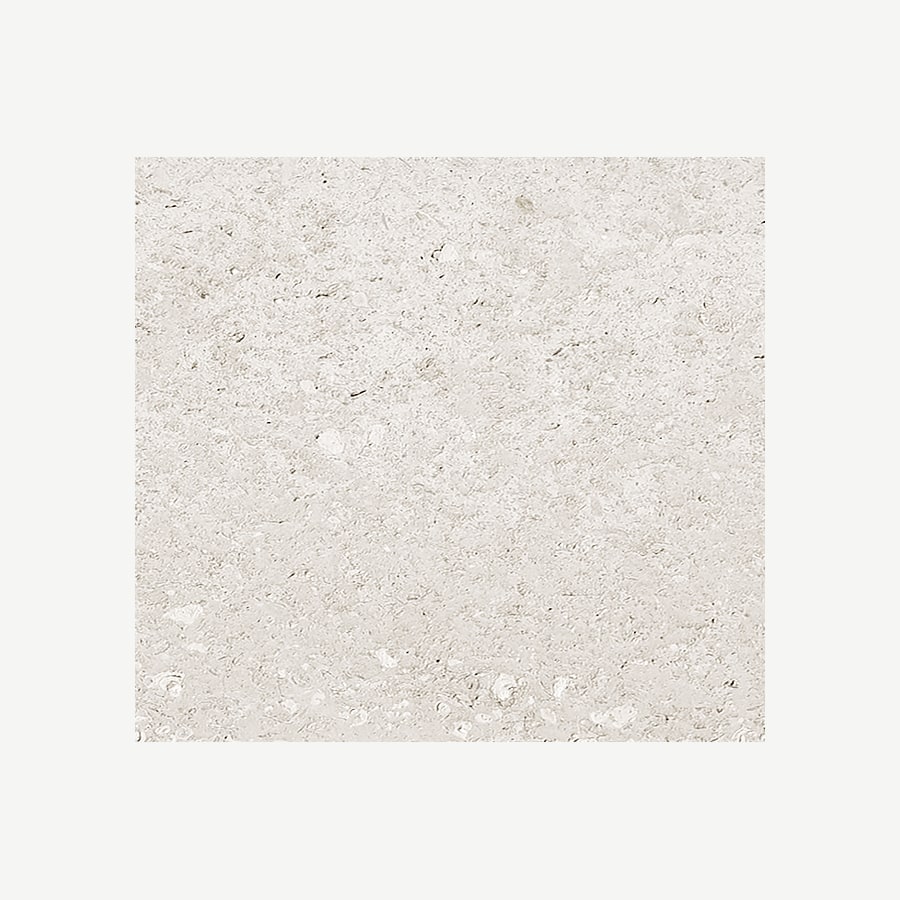
Portland limestone extracted by mining rather than open quarrying on the Isle of Portland — the stone of St Paul’s and half of institutional London, still cut from the same island. The declaration is the point here: 44.7 kgCO2e per tonne cradle-to-gate, third-party verified, with 96% of extraction outputs going to secondary use. The comparison a specifier actually needs is with imported stone, where sea freight dominates: declarations for imported sandstone and granite carry 213–245 kgCO2e/tonne of A4 alone. Albion’s A4 is not declared, but it is a lorry from Dorset, not a container ship.
Carbon and evidence
Product Evidence
Evidence currently held for the Albion Stone product record.
Recorded Carbon Result
A1–A3 GWP-total per tonne for Grove Whitbed at 50 mm typical thickness, dominated by processing energy (A3 = 39.0) rather than extraction (A1 = 5.37). For scale against the imported stone already on this platform: Indian sandstone and Chinese granite declare 50–209 kgCO2e/tonne at A1–A3 plus 213–245 of sea-freight A4 that UK stone does not incur.
Indicator: GWP-total
A1–A3 covers raw-material supply, transport to manufacture and manufacturing. It is product-stage information, not a whole-life result.
Environmental Product Declaration
EPD recorded- Coverage
- Specific product
- Declared unit
- 1000 kg printed bare as "1000"; equals 1 tonne
- Programme
- EPD Hub
- Registration
- HUB-1330
- Standard
- EN 15804:2012+A2:2019, ISO 14025, ISO 21930
- Valid until
- 2029-05-03
- Verification
- Third-party verified
Declared product is Grove Whitbed at 50 mm typical thickness, weighted by production volume — NOT the whole Albion range. Albion quarry several beds (Whitbed, Basebed, Grove Whitbed) of differing density, so this figure should not be read as covering every bed and thickness. Produced with BS EN 771-6 masonry-unit specification in view. Declared variation in GWP-fossil for A1–A3 is 5%. Data period 2022.
Carbon profile
kgCO2e per 1 tonne of Portland Stone · each bar starts at zero · local scale
A1-A3 product
44.7
A4-A5 site*
—
B use
—
C end of life
5
D reuse / recycling
-8.46
Reported GWP Modules
Displayed as stored; modules are not added together here.
A1–A3
44.7 kgCO₂e
per 1 tonne of Portland Stone
C1
3.17 kgCO₂e
per 1 tonne of Portland Stone
C2
0.121 kgCO₂e
per 1 tonne of Portland Stone
C3
1.21 kgCO₂e
per 1 tonne of Portland Stone
C4
0.501 kgCO₂e
per 1 tonne of Portland Stone
D
-8.46 kgCO₂e
per 1 tonne of Portland Stone
Sourced Product Claims
- BES 6001 responsible sourcing, rated ExcellentManufacturer declaredSource
- 96% of extraction outputs go to secondary material useThird-party verifiedSource
- Third-party verified EPD, valid to 2029-05-03Third-party verifiedSource
- Declaration covers Grove Whitbed at 50 mm, not all Albion beds and thicknessesThird-party verifiedSource
Evidence Sources
Comparison Status
This result should be displayed for information only and not ranked against another product.
- • The carbon result is not linked to an evidence source.
- • The EPD is not linked to an evidence source.
Design & Specification Notes
Qualitative notes for early design discussion. Not product-specific EPD evidence, and not a basis for numerical comparison.
Portland limestone extracted by mining rather than open quarrying on the Isle of Portland — the stone of St Paul’s and half of institutional London, still cut from the same island.
Typical Uses
- •Facade cladding
- •Weather protection
- •External accents
Key Performance
Weather-resistant finish for facade exposure.
Typical Service-Life Estimate
100 yearsGeneric estimate for early design discussion; confirm with the manufacturer.
Specification Actions
- •Confirm the current EPD covers the selected product, finish and manufacturing route.
- •Calculate transport distances for primary materials.
- •Document material reuse or reclaimed content percentages.
Indicative Health & Indoor Air
Specification
- Finish
- Dimension limestone — sawn, honed or rubbed finishes
- Country of manufacture
- United Kingdom